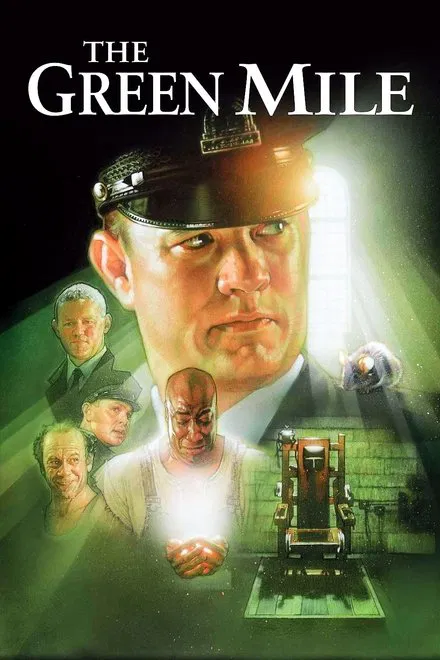
Directed by: Frank Darabont
Starring: Tom Hanks, Michael Clarke Duncan, David Morse, Bonnie Hunt, Doug Hutchison, Sam Rockwell
🧠 Introduction: Walking the Line Between Life and Death
The Green Mile (1999) is a haunting blend of supernatural mystery and emotional drama, adapted from Stephen King’s novel. Set in a Depression-era prison, the film follows death row supervisor Paul Edgecomb (Tom Hanks) and the gentle giant John Coffey (Michael Clarke Duncan), whose miraculous powers raise questions about suffering, justice, and redemption. The ending is both heartbreaking and mysterious, with layers of religious symbolism and deep ethical questions. What is the true cost of Paul’s choices? Why is Coffey’s death so painful, and what does the film say about miracles and mercy?
🔒 The Miracle Worker: Powers and Pain
John Coffey, condemned for the rape and murder of two girls, is a figure of paradox: physically intimidating, yet childlike and full of compassion. Over time, Paul and the guards come to believe in Coffey’s innocence—especially after witnessing his miraculous healing abilities. Coffey cures Paul’s urinary infection, brings a dead mouse back to life, and absorbs the suffering of others, only to release it in dramatic, often violent bursts. The story positions Coffey as a Christlike figure, suffering for the sins of others and misunderstood by the world.
😔 The Tragedy of Justice: Punishing the Innocent
Despite the guards’ attempts to save him, the legal system grinds inexorably forward. Coffey refuses to escape, declaring that he is “tired of all the pain” in the world. His death, by electric chair, is depicted as both an act of mercy and a profound injustice. Paul is left devastated, grappling with the knowledge that he has played a role in the execution of a true miracle worker.
🌌 The Weight of Immortality: Cursed by Kindness
The film’s final act flashes forward decades. Paul, now an old man in a nursing home, reveals that he has lived an unnaturally long life, seemingly as a consequence of Coffey’s touch. Mr. Jingles, the mouse, is also alive—an echo of Coffey’s lingering power. Paul wonders if his extended life is a punishment, a way of atoning for the role he played in Coffey’s death. The film’s epilogue suggests that miracles are double-edged, bringing both healing and sorrow to those who witness them.
🎯 Ending Explained: Mercy, Guilt, and the Mystery of Grace
The Green Mile ends on a note of profound ambiguity. Coffey’s sacrifice is both a tragedy and a blessing, a reminder that goodness often goes unrecognized in a broken world. Paul’s long life is not a gift, but a burden, a testament to the enduring weight of conscience. In its closing moments, the film asks whether grace is ever truly free, or whether those who encounter miracles must pay a price. It is a story of redemption hard won and mercy never fully understood.
 About
About