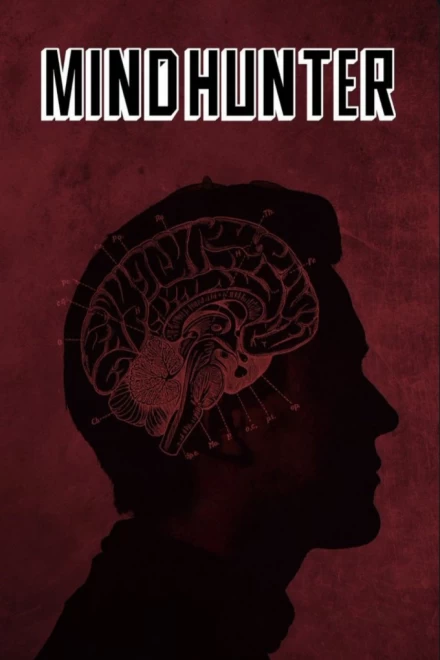
Directed by: David Fincher, Asif Kapadia, Tobias Lindholm
Starring: Jonathan Groff, Holt McCallany, Anna Torv, Cameron Britton
🧠 Introduction to the Psychology of Crime
Mindhunter Season 1 approaches criminal psychology with an academic seriousness that distinguishes it from conventional crime dramas. The series positions itself within the late 1970s, a period when the FBI remained anchored to traditional investigative procedures and avoided psychological speculation. As the narrative begins, Holden Ford is a young hostage negotiation instructor whose curiosity about criminal motives places him at the edge of institutional acceptance. His intellectual restlessness forms the central axis of the show’s thematic structure. Ford senses that there is a knowledge gap in how violent offenders are understood, and this sense of absence motivates the journey that follows.
The show’s opening episodes invite viewers into a social climate shaped by postwar conformity, bureaucratic caution, and a reluctance to explore the inner lives of offenders. Rather than presenting murder solely as a matter of evidence and physical trails, Mindhunter frames it as a question of human behavior, perception, and pathology. Season 1 builds its tension not through fast-paced action, but through the slow unraveling of psychological landscapes. This method results in a story that feels both academic and unsettling.
🔍 Act I – The Formation of an Unlikely Partnership
Holden Ford’s early dissatisfaction becomes the catalyst for his partnership with Bill Tench, a seasoned agent whose practical experience balances Ford’s enthusiasm. Tench runs the FBI’s Teaching Board program, traveling to different law enforcement agencies to instruct officers on investigative techniques. When Ford joins him, their intellectual differences quickly emerge. Ford pushes for a more interpretive approach to crime, while Tench prefers a cautious, evidence-driven perspective. Their contrasting methods create a productive tension that energizes the season.
During their travels, Ford and Tench encounter cases that cannot be explained through traditional logic. These field experiences reinforce Ford’s belief that the FBI must adopt a new framework for understanding violent offenders. Their conversations often move beyond professional boundaries, turning into philosophical exchanges about human nature, trauma, impulse, and social conditioning. These discussions serve as the intellectual engine of Mindhunter, offering viewers insight into the historical formation of the FBI’s Behavioral Science Unit.
The partnership gains an additional layer of legitimacy once Dr. Wendy Carr, a psychology professor, joins the team. Her academic rigor and structural thinking ground the theoretical impulses of Ford and Tench. She advocates for systematized interviews, reliable categories, and ethical consistency, thereby shaping the emerging discipline. Wendy’s presence introduces a methodical rhythm to the storytelling, highlighting how interdisciplinary collaboration was essential to the unit’s formation.
🗣️ Act II – Enter the Interview Room
The heart of Season 1 lies in the interviews with incarcerated serial killers. These sequences unfold with theatrical minimalism, emphasizing voice, posture, and psychological tension. The most memorable figure is Ed Kemper, whose calm and articulate recounting of violence unsettles both the agents and the viewer. The intensity of these conversations is heightened by the fact that Kemper is not portrayed as a caricature. Instead, the show presents him as intelligent, reflective, and disturbingly self-aware. This portrayal forces audiences to grapple with the dissonance between human appearance and horrific capability.
As Ford grows more confident, he begins pushing boundaries, sometimes intentionally provoking offenders to elicit deeper insights. Tench recognizes the dangers of these methods, warning Ford about the emotional and ethical risks of immersing too closely into the minds of killers. These warnings often go unheeded, and Ford’s evolving attitude becomes one of the season’s most significant dramatic arcs. His increasing comfort in the interview room reflects a subtle shift in his moral compass, raising questions about whether understanding darkness requires absorbing part of it.
The interviews also reveal gaps in the FBI’s language and classification systems. Terms like serial killer, spree killer, and organized or disorganized offenders emerge not as predefined categories, but as constructs developed through observation and analysis. This process of invention is one of the most intellectually fascinating elements of Season 1. The viewer witnesses the birth of a vocabulary that would later define modern criminology.
📉 Act III – Institutional Conflict and Personal Unraveling
Despite early progress, Ford and Tench face resistance from FBI leadership, who view their work as speculative and potentially damaging to the bureau’s reputation. The institutional skepticism becomes more pronounced as their interviews attract media attention. The show uses these conflicts to highlight the tension between innovation and bureaucracy. Ford’s unorthodox strategies place him at odds with superiors, while Tench finds himself mediating between Ford’s vision and administrative caution.
Parallel to these professional conflicts, the show explores the characters’ personal struggles. Holden Ford’s relationship with Debbie begins deteriorating as his work consumes his emotional bandwidth. His detachment, once an asset in interview rooms, undermines his ability to maintain intimacy. Debbie expresses concern that Ford is becoming desensitized to violence, and her observations introduce an important counterpoint to the narrative. The season suggests that psychological investigation carries personal risks that extend beyond the workplace.
Bill Tench’s storyline provides a different perspective on emotional strain. He attempts to stabilize a home life that grows increasingly complicated, particularly in relation to his son, who displays troubling behavioral signs. Tench’s domestic experiences reinforce the central theme that understanding human behavior does not always guarantee control or clarity. His arc underscores the emotional toll of maintaining composure while studying violence.
⚠️ Act IV – Ethical Boundaries and Psychological Collapse
As the season approaches its conclusion, Ford’s confidence escalates into arrogance. He begins disregarding established boundaries, believing that his psychological insight grants him exceptional authority. This culminates in an incident where Ford confronts a suspect using language and tactics reminiscent of the offenders he studies. The resulting backlash from both colleagues and superiors forces Ford to confront the consequences of his methods.
The psychological tension peaks during a final confrontation with Ed Kemper. What begins as a routine visit becomes a destabilizing encounter that strips Ford of the illusion of control. Kemper’s physical proximity and emotional unpredictability trigger Ford’s panic, shattering his intellectual bravado. The panic attack symbolizes the cost of prolonged psychological exposure. Ford’s collapse suggests that no amount of theoretical knowledge can fully shield someone from the emotional gravity of violent criminality.
Meanwhile, Wendy Carr observes these developments with professional concern. Her emphasis on systematized methodology contrasts sharply with Ford’s improvisational style. The internal disputes within the Behavioral Science Unit emphasize the fragility of their new discipline. The season makes clear that pioneering work often emerges from friction, disagreement, and emotional strain.
👁️ Symbolism and Deeper Themes
Mindhunter Season 1 is saturated with thematic motifs that reinforce its psychological focus. One recurring element is the contrast between surface normalcy and hidden violence. Serial killers such as Kemper present as articulate, polite, and even affable, destabilizing assumptions about what danger looks like. This raises questions about society’s reliance on visual cues to judge safety.
Another theme is epistemic uncertainty. Ford and his colleagues operate without established frameworks, building their discipline from fragments of observation. Their work reflects the idea that knowledge is provisional, evolving, and vulnerable to personal bias. The show uses dim lighting, claustrophobic interview rooms, and long pauses to visually communicate the instability of psychological inquiry.
The recurring glimpses of the ADT serviceman offer a chilling reminder that future threats remain both present and unnoticed. His mundane activities clash with the viewer’s awareness of his criminal trajectory, reinforcing the show’s central question about the invisibility of violence within ordinary life.
🎯 Final Thoughts – The Birth of a Discipline
By the end of Mindhunter Season 1, the FBI Behavioral Science Unit stands on uncertain but promising ground. The season traces the intellectual evolution of criminal profiling, revealing both its potential and its limitations. Holden Ford’s breakdown is not portrayed as failure but as the inevitable outcome of engaging deeply with destructive minds. Tench’s stabilizing presence and Wendy Carr’s analytical rigor suggest that profiling requires a balance of intuition, structure, and emotional resilience.
Mindhunter succeeds because it treats criminal psychology not as spectacle, but as a serious inquiry into human behavior. The season’s careful pacing invites viewers to contemplate violence, identity, and the fragile structure of the self. Rather than offering easy answers, it presents a world where understanding is always partial and where every insight carries a cost. Season 1 closes with the sense that the Behavioral Science Unit has only begun its work, and that the pursuit of knowledge will continue to challenge the boundaries of mind, morality, and institutional authority.
 About
About