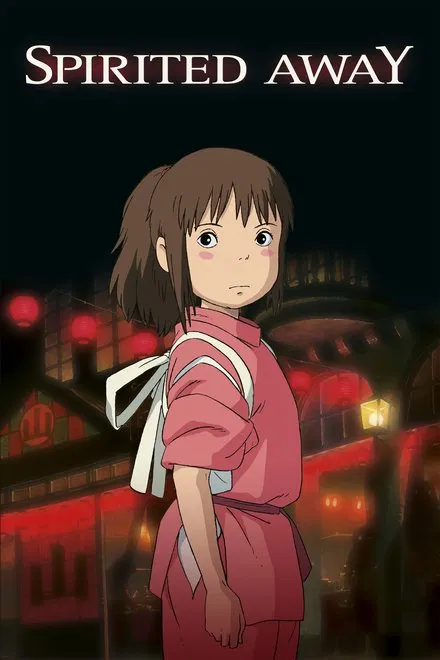
Directed by: Hayao Miyazaki
Starring: Rumi Hiiragi, Miyu Irino, Mari Natsuki, Bunta Sugawara, Yumi Tamai
🧠 Introduction: The Journey into Wonder
Spirited Away (2001) is Hayao Miyazaki’s masterpiece of fantasy, imagination, and the bittersweet passage from childhood to maturity. Winner of the Academy Award for Best Animated Feature, the film tells the story of Chihiro, a sullen ten-year-old girl who wanders into a magical world and must rescue her parents—transformed into pigs—by working in a bathhouse for spirits. Its final scenes, layered with mystery and quiet emotion, have left viewers pondering the true meaning of Chihiro’s odyssey. What is real, what is dream, and what does it mean to let go and move forward?
🌀 Lost in the Spirit World: Transformation and Identity
The story’s brilliance lies in its merging of Japanese folklore with universal themes of change and resilience. Chihiro enters the spirit world unwillingly, and her very name is taken by Yubaba, the witch who runs the bathhouse. By renaming Chihiro as “Sen,” Yubaba tries to erase her identity, but Chihiro’s persistence and kindness help her rediscover herself.
Throughout her journey, Chihiro faces tasks both menial and perilous: cleaning a stinking river spirit, showing compassion to No-Face, and braving the enigmatic Zeniba’s cottage in the countryside. Each encounter challenges her assumptions and teaches her resourcefulness, empathy, and the value of memory. Her friendship with Haku, a dragon-boy who has forgotten his own true name, becomes the emotional core of the story, as both characters help each other remember and reclaim their identities.
🐉 The Revelation: Names, Memories, and Freedom
In a pivotal moment, Chihiro remembers Haku’s real name—he is the spirit of the Kohaku River, who once saved Chihiro as a child. This recognition restores his identity and breaks Yubaba’s spell, allowing him to transform back into his true form. The power of names and memory is central: in Miyazaki’s worldview, to know one’s name is to know oneself, and to forget is to risk losing everything that matters.
The same applies to Chihiro’s parents, who have forgotten their human boundaries and given in to greed. By withstanding temptation and remaining true to herself, Chihiro wins her own freedom and theirs.
🚂 The Train Ride: Between Worlds
One of the film’s most haunting sequences is Chihiro’s train journey across the flooded landscape—silent, reflective, suspended between past and future. The empty seats, faceless passengers, and endless horizon suggest the liminality of childhood: a place between innocence and understanding, where the rules are uncertain and the way home is never guaranteed.
This passage is not just literal but psychological—a journey into the self, where Chihiro must face fear, loneliness, and uncertainty before emerging transformed. The train scene is often read as a metaphor for life’s transitions, where we leave behind what we knew and must trust in the unknown.
🌸 The Final Test: Compassion over Trickery
Back at the bathhouse, Chihiro is faced with one last challenge: identifying her parents among a group of pigs. Refusing to be fooled by illusion, she insists that none are her parents. This act of trust and resolve is her true test—choosing compassion and intuition over deception and greed. Yubaba is forced to let her go, and Chihiro is reunited with her real parents, restored to their human forms.
🍃 Ending Explained: Letting Go and Moving Forward
Chihiro’s return to the human world is gentle but poignant. The tunnel, overgrown with weeds and washed in soft sunlight, is both a literal and symbolic threshold. Though her parents have no memory of their ordeal, Chihiro has been irrevocably changed. She is stronger, braver, and more compassionate—a child on the cusp of adolescence, ready to face life’s uncertainties.
Miyazaki leaves several mysteries unresolved: Was it all a dream? Will Chihiro remember what happened? The answer, perhaps, is less important than the growth she achieved. The film suggests that childhood’s wonders and terrors shape us forever, even if we cannot recall them. The spirit world is both real and metaphorical—a landscape of the soul that we all must traverse, and from which we all, eventually, return.
🎯 Final Thoughts: The Gifts of the Journey
Spirited Away endures because it refuses to simplify growing up into a single lesson or event. Its ending is a gift—a reminder that memory, kindness, and courage are the treasures we carry as we move forward. Chihiro’s story is every child’s story: a journey through fear and wonder, ending not with answers, but with the quiet confidence to face whatever lies ahead.
 About
About