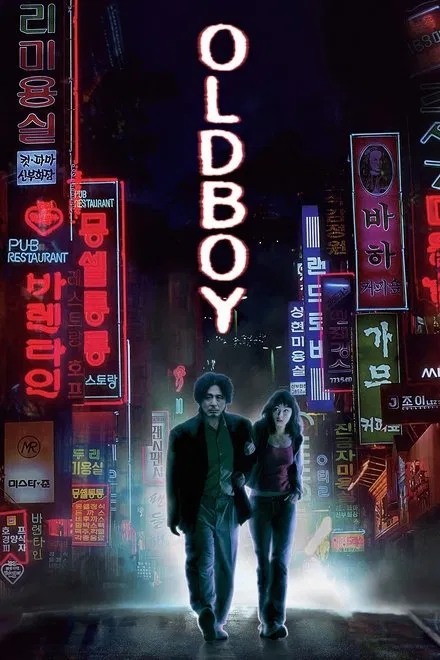
Directed by: Park Chan-wook
Starring: Choi Min-sik, Yoo Ji-tae, Kang Hye-jung, Ji Dae-han, Oh Dal-su
🧠 Introduction: The Prison of the Past
Oldboy (2003) is a baroque nightmare of vengeance and trauma, a film that takes the conventions of noir and melodrama and twists them into a fever dream of violence, obsession, and shocking revelation. Park Chan-wook’s masterpiece is famous for its bravura style and its gut-punch of a twist ending—one that leaves audiences horrified, awed, and strangely moved. What does it all mean? And what is left when vengeance consumes everything?
🔒 Imprisonment and Release
Oh Dae-su (Choi Min-sik) is kidnapped and imprisoned in a windowless room for 15 years, with no explanation. Upon his sudden release, he embarks on a quest for answers—and revenge—encountering a young woman, Mi-do, who becomes his companion and lover. As Dae-su investigates his captor, Lee Woo-jin (Yoo Ji-tae), he discovers a labyrinth of secrets, manipulation, and orchestrated suffering.
👁️ The Terrible Truth
The film’s climax is a dizzying descent into horror. Dae-su learns that Mi-do is actually his own daughter, the result of an elaborate and meticulously engineered plot by Woo-jin, who seeks revenge for a childhood trauma—one in which Dae-su inadvertently played a role. The revelation shatters Dae-su, who begs Woo-jin for mercy, cutting out his own tongue in a futile attempt to erase the past.
🌀 The Cycle of Revenge
With Woo-jin’s suicide, the film shifts into a strange, elegiac register. Dae-su, accompanied by a hypnotist, attempts to erase his memory and move forward with Mi-do. The final scene—ambiguous, snowbound, and sorrowful—leaves the question unresolved: can the past ever truly be forgotten? Or is Dae-su trapped in an endless circle of guilt and longing?
🎯 Ending Explained: What Freedom Means
Oldboy is a film about the cost of secrets and the impossibility of closure. Its ending is both brutal and poetic: Dae-su’s quest for revenge destroys not only his enemy, but himself. The hypnotist’s intervention suggests that some wounds can be numbed, but never healed. In the end, memory is both prison and key, and the cycle of violence is, perhaps, unbreakable.
 About
About