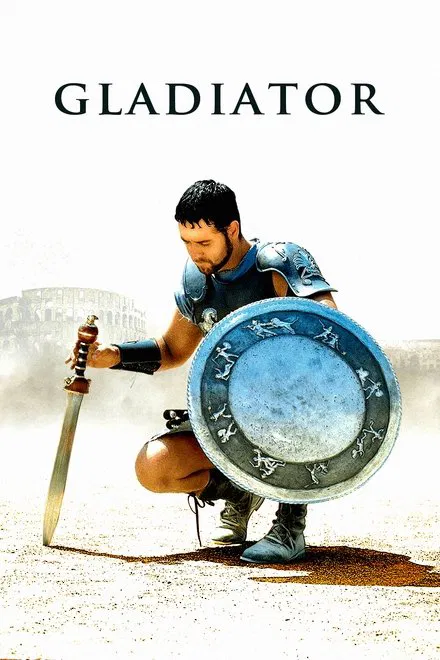
Directed by: Ridley Scott
Starring: Russell Crowe, Joaquin Phoenix, Connie Nielsen, Oliver Reed, Richard Harris, Djimon Hounsou
🧠 Introduction: The Journey from Slave to Legend
Gladiator (2000) is more than a historical epic—it’s a meditation on revenge, justice, and the ultimate cost of freedom. Ridley Scott’s Oscar-winning spectacle follows Maximus Decimus Meridius (Russell Crowe), a loyal Roman general betrayed by the corrupt Commodus (Joaquin Phoenix) and forced to become a slave and gladiator. As Maximus fights his way back toward vengeance and redemption, the film crescendos in an emotionally complex ending that balances brutality and grace, legacy and loss. But what does the final, bittersweet sequence truly mean? And why has it lingered in the imagination of audiences for decades?
⚔️ Betrayal and the Fall: From General to Slave
The first act sets up Maximus’s role as the chosen heir of Emperor Marcus Aurelius (Richard Harris), who dreams of returning Rome to a republic. Commodus, desperate for power and validation, murders his father and orders Maximus’s execution. Escaping only to find his family murdered, Maximus’s path to vengeance begins in blood and despair. Sold into slavery, he rises through the ranks of gladiators, finding camaraderie in Juba (Djimon Hounsou) and others, and winning the hearts of the Roman people.
Through every victory in the arena, Maximus’s fame grows, making him both a hero to the public and a threat to Commodus’s regime. His motivations, however, remain deeply personal—rooted not in ambition, but in a burning sense of loss and the hope of reunion in the afterlife.
🏟️ The Final Duel: Sacrifice and the End of Tyranny
The climax arrives in the Colosseum, as Commodus, desperate to secure his legacy, challenges Maximus to a public duel. Before the fight, Commodus stabs Maximus, secretly mortally wounding him to stack the odds in his favor. Despite his injury, Maximus manages to defeat Commodus in front of the Roman masses. As the corrupt emperor dies, Maximus’s vision drifts between the blood-soaked sand and the golden fields of Elysium—Rome’s mythic afterlife.
With his dying breath, Maximus ensures that Marcus Aurelius’s final wish is honored: Rome is restored to the Senate, and the cycle of tyranny is broken, if only for a moment. Lucilla (Connie Nielsen), Commodus’s sister and Maximus’s former love, grieves, while Juba prepares Maximus’s body for burial, promising to meet him again “but not yet.”
🌾 Elysium: The Promise of Peace
The film’s final moments are a visual poem: Maximus, dying, sees himself reunited with his wife and son in the tranquil afterlife. The fields of Elysium are shot in golden light, a stark contrast to the brutality of the Colosseum. This vision is not just a fantasy—it’s Maximus’s spiritual reward for a life defined by honor and sacrifice. The peace he never found in Rome is granted to him beyond death.
🎯 Ending Explained: Legacy and Freedom
The ending of Gladiator is both tragic and triumphant. Maximus’s death is not defeat but release. He liberates Rome from a tyrant, fulfills Marcus Aurelius’s vision, and is granted the reunion he yearned for. The echoes of his deeds reverberate as Juba buries his talismans in the dirt and Lucilla honors his sacrifice. The film suggests that true freedom and justice may require ultimate sacrifice, and that heroism endures not in monuments, but in memory and love.
In its final frames, Gladiator offers catharsis—a sense that even in a corrupt world, redemption is possible, and that the spirit of a just man can outlast the empires that rise and fall.
 About
About