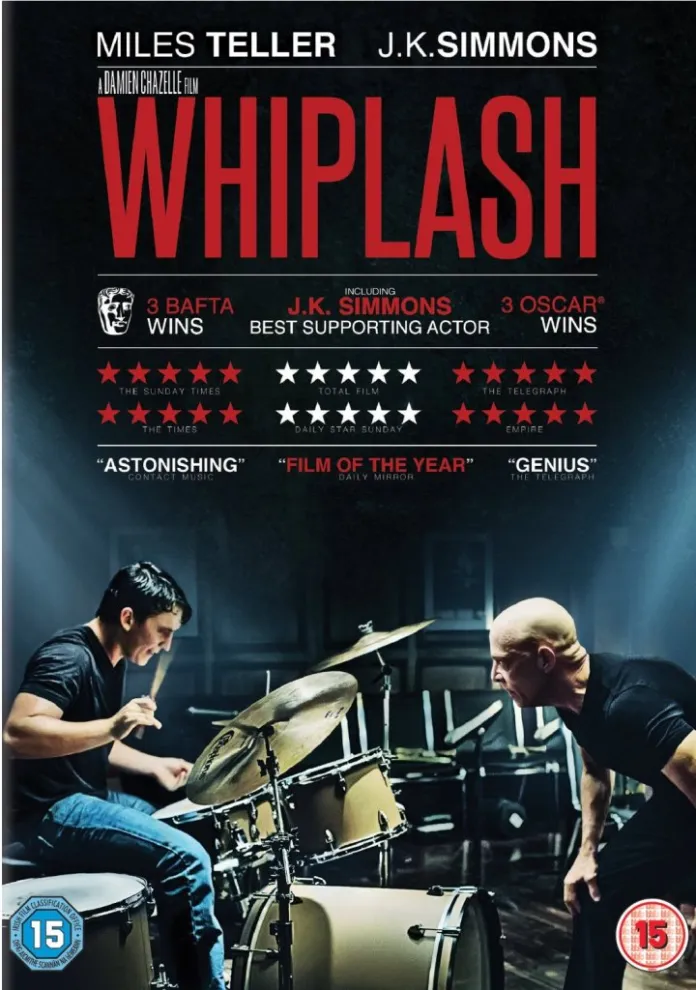
Directed by: Damien Chazelle
Starring: Miles Teller, J.K. Simmons, Paul Reiser, Melissa Benoist, Austin Stowell
🧠 Introduction: The Cost of Greatness
Whiplash (2014) is a fever-pitched portrait of obsession, ambition, and the price of perfection. Damien Chazelle’s breakout film follows aspiring jazz drummer Andrew Neiman (Miles Teller) as he submits to the brutal mentorship of conductor Terence Fletcher (J.K. Simmons). The film’s closing performance—intense, ambiguous, and almost wordless—leaves audiences breathless and divided. Does Andrew win? Does he lose himself? And what does that final, electrifying drum solo really mean?
🥁 Building the Beat: Obsession and Abuse
From its opening scene, Whiplash is a study in extremes. Andrew’s drive to become “one of the greats” pushes him to physical and emotional breaking points: bleeding hands, failed relationships, sleepless nights, and public humiliation. Fletcher, notorious for his sadistic teaching methods, alternates between praise and psychological warfare, shaping his students through fear and relentless criticism. Their dynamic is a battleground—equal parts mentorship and manipulation.
🧨 The Betrayal and the Test
Andrew’s quest for greatness brings brief rewards, but more often pain. After being expelled from Fletcher’s class and witnessing a former student’s suicide, Andrew testifies against his mentor, leading to Fletcher’s dismissal. Months later, a chance encounter between the two leads to Andrew’s invitation to perform at a prestigious jazz festival. But Fletcher, still harboring resentment, sets Andrew up for public humiliation by giving him unfamiliar sheet music on stage, then leaving him to fail.
🔥 The Solo: Defiance or Submission?
In a moment of audacious rebellion, Andrew reclaims the stage. He interrupts the band, launches into an extended, breathtaking solo, and forces Fletcher to adapt, ultimately winning his approval. The camera lingers on their faces: a subtle smile from Fletcher, a look of exhausted triumph from Andrew. The boundaries between victory and defeat, respect and destruction, blur in a torrent of music and sweat.
💔 Ending Explained: Triumph or Tragedy?
The final scene is wordless, yet electric. Is Andrew victorious—a genius finally recognized by his tormentor—or has he lost himself, sacrificing everything for a moment of validation? The film leaves this question unanswered, instead framing greatness as a double-edged sword. Fletcher’s philosophy—“There are no two words in the English language more harmful than ‘good job’”—echoes in the silence, a warning and a challenge to all who pursue excellence.
🎯 Final Thoughts: The Downbeat That Lingers
Whiplash refuses to offer comfort or closure. Its ending is both a crescendo and a warning: greatness may require sacrifice, but the line between inspiration and abuse is razor-thin. In the echo of Andrew’s final downbeat, viewers are left to decide for themselves—was it worth it?
 About
About