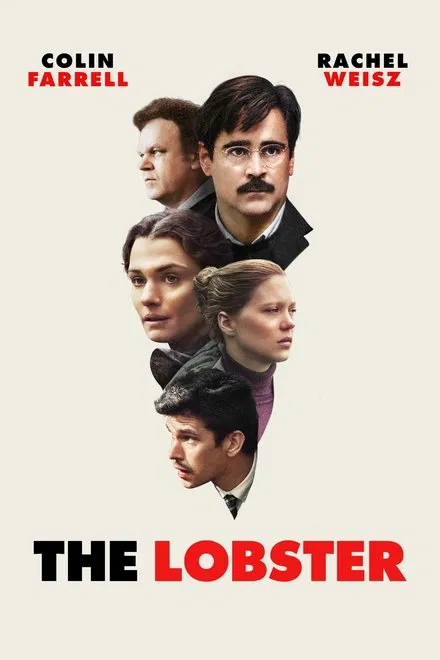
Directed by: Yorgos Lanthimos
Starring: Colin Farrell, Rachel Weisz, Olivia Colman, John C. Reilly, Ben Whishaw
🧠 Introduction: The Price of Connection
The Lobster (2015) is one of the strangest and most darkly comic films of the last decade. Set in a dystopian world where single people are transformed into animals if they fail to find a partner within 45 days, the film is a brutal satire of modern relationships. Its ending—deliberately unresolved and excruciating—has inspired debate and analysis ever since. Does David (Colin Farrell) blind himself for love? And what does this final, ambiguous gesture mean?
🍽️ Ritual, Rebellion, and the Logic of Absurdity
David, dumped by his wife, is sent to a hotel for singles, where bizarre rituals and strict rules enforce conformity. Relationships are based on superficial commonalities (a limp, a nosebleed, a lisp), and those who fail are transformed into animals of their choosing. David eventually escapes to join the Loners, a rebellious group with equally draconian codes—here, romance is forbidden. He falls for the Short-Sighted Woman (Rachel Weisz), and the two attempt to survive in a world with no place for genuine love.
👁️ The Final Choice: Love or Identity?
In the final scene, David faces an impossible decision. In order to be with the Short-Sighted Woman, he must blind himself to match her disability. He retreats to a bathroom, knife in hand, as she waits in suspense. The camera lingers on her face, anxious and hopeful, while David’s fate remains unseen.
💔 Ending Explained: Is Love Worth the Sacrifice?
By refusing to show whether David blinds himself, Lanthimos forces viewers to consider the price of love and the arbitrary demands of society. Is true connection possible in a world obsessed with sameness? Or are we all, to some degree, performing for others—sacrificing parts of ourselves to fit in?
🎯 Final Thoughts: Embracing Ambiguity
The Lobster ends in discomfort and doubt, daring us to question the systems—romantic, social, or otherwise—that govern our lives. Its final shot is not a resolution but a provocation: In love, as in life, we are defined by the choices we cannot fully understand.
 About
About