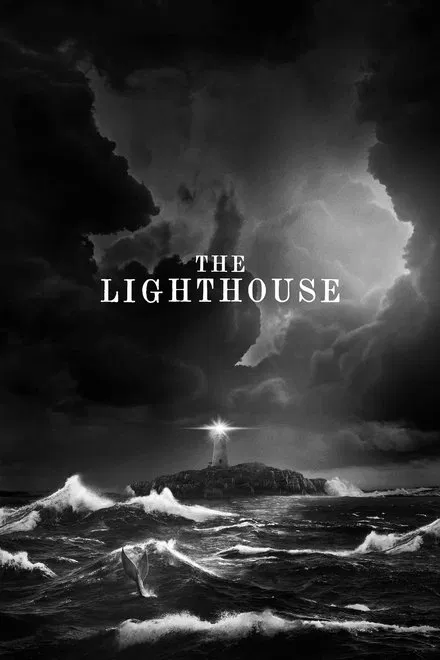
Directed by: Robert Eggers
Starring: Willem Dafoe, Robert Pattinson
🌊 Introduction: Madness by the Sea
The Lighthouse (2019) is a feverish descent into isolation, obsession, and myth, set on a remote New England rock at the turn of the 20th century. The story pits two “wickies”—the grizzled Thomas Wake and the younger, haunted Ephraim Winslow—against the elements and each other, their sanity eroded by drink, ritual, and the blinding allure of the lighthouse’s mysterious beacon. Robert Eggers’ film is densely layered with references to folklore, classical myth, and the subconscious, culminating in an ending as enigmatic as the ocean itself.
🚨 Power, Submission, and the Cycle of Authority
The relationship between Wake and Winslow is a struggle for dominance. Wake insists on absolute obedience, dictating the younger man’s every move, while Winslow rebels, alternately seeking approval and plotting escape. Their rituals—meals, toasts, chores—become battlegrounds for control. As storms rage and supplies dwindle, boundaries blur: master and servant, father and son, friend and foe.
This dynamic is further complicated by the characters’ shifting identities: Winslow confesses to having assumed another man’s name, and both men are unreliable narrators, their accounts of events contradictory and laced with accusation. The lighthouse itself becomes a symbol of unattainable power and forbidden knowledge, jealously guarded by Wake.
🦑 Myth, Hallucination, and the Lighthouse’s Light
The film’s hallucinatory sequences are rife with symbolism. Winslow dreams of tentacled horrors, mermaids, and drowned men; he is tormented by the incessant cry of a one-eyed seagull, believed to harbor the souls of dead sailors. These visions blur the line between supernatural and psychological: are they manifestations of guilt, or proof that the island is cursed?
The climax arrives when Winslow, having killed Wake and unlocked the tower, ascends to the beacon. The light opens before him in a burst of ecstasy and horror—his screams echo the myth of Prometheus, punished for seeking forbidden fire. The light, once a symbol of salvation, becomes an agent of destruction.
🐦 The Final Image: Punishment and Release
The final shot shows Winslow’s broken body, naked and bleeding, sprawled on the rocks as gulls peck at his innards. This image draws directly from Greek mythology: like Prometheus, Winslow is punished for overreaching, his suffering both corporeal and cosmic. The cyclical nature of their torment suggests that the island, the lighthouse, and the men themselves are locked in an eternal return—each doomed to repeat their roles.
Eggers leaves the film’s reality unresolved: was the light a source of truth, madness, or both? Are the supernatural elements real, or projections of a mind in freefall? The ambiguity is the point: the line between myth and memory, sanity and delusion, remains forever blurred.
🎯 Final Thoughts: The Light That Burns
The Lighthouse is a meditation on power, isolation, and the longing for transcendence. Its ending offers neither escape nor resolution, only the certainty that human ambition—like the ocean—can never be tamed. In Eggers’ vision, enlightenment is both blinding and annihilating, leaving us to ponder the cost of chasing what cannot be possessed.
 About
About