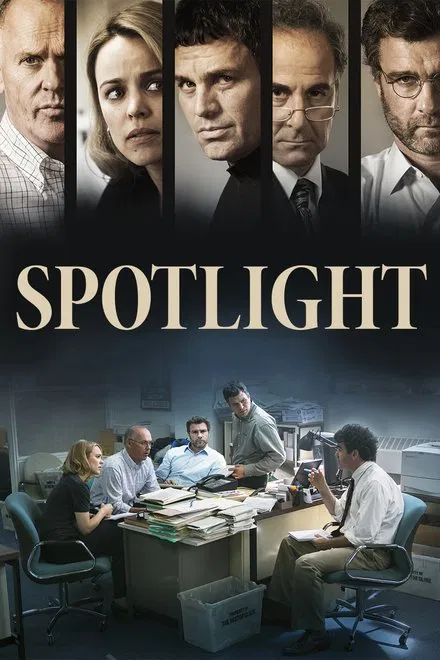
Directed by: Tom McCarthy
Starring: Michael Keaton, Mark Ruffalo, Rachel McAdams, Liev Schreiber, Stanley Tucci, Brian d’Arcy James
📰 Introduction: The Power of the Press
Spotlight (2015) is a rigorously unsentimental film about the arduous, methodical process of investigative journalism. Chronicling the Boston Globe’s “Spotlight” team as they uncover decades of child abuse by Catholic priests—and the cover-up that enabled it—the film transforms real-life reporting into a suspenseful, deeply ethical drama. Its power comes not from sensationalism, but from its meticulous attention to detail, its respect for victims, and its insistence that accountability is always hard-won.
🔍 Building the Case: Fact, Resistance, and Persistence
The Spotlight team—led by editor Walter “Robby” Robinson, reporters Michael Rezendes, Sacha Pfeiffer, and Matt Carroll—must sift through sealed records, reluctant witnesses, and institutional resistance. The film is relentless in its focus on the process: phone calls, interviews, archive dives, and legal wrangling. Each small breakthrough is hard-earned and fragile.
The investigation begins with a single case, but soon uncovers a systematic pattern of abuse and concealment. The Church’s power in Boston is pervasive, and even the Globe’s own history is implicated—editors realize they missed crucial evidence years earlier. The film offers no easy catharsis; every step forward brings new obstacles, doubts, and moral ambiguities.
💡 Institutional Power and Personal Responsibility
Spotlight carefully depicts the insidiousness of institutional protection. Lawyers stonewall, victims are pressured into silence, and community leaders urge restraint “for the good of the city.” The film refuses to demonize individuals, instead showing how ordinary people—by prioritizing stability, reputation, or career—can become complicit in harm.
The reporters, too, must reckon with their own blind spots and complicity. Each is forced to confront personal connections to the Church, and to question the boundaries of professional detachment. The cost of telling the truth is real: careers, friendships, and faith itself are put at risk.
🗞️ The Ethics of Journalism and the Burden of Proof
One of the film’s central themes is the responsibility of journalism. The Spotlight team withholds publication until they can prove the abuse is systemic, not just a series of isolated incidents. This insistence on accuracy, corroboration, and fairness grounds the film’s moral authority. At the same time, the pressure to break the story—and the fear of being scooped by rivals—raises questions about timing, competition, and the possibility of unintended harm.
Director Tom McCarthy avoids melodrama, instead trusting the quiet intensity of dialogue, research, and confrontation. The emotional climax arrives not in a courtroom, but in the exhausted relief and horror of the newsroom as the phones begin to ring—victims at last empowered to speak.
🔦 Impact and Aftermath: The Light That Shines
The publication of the story sends shockwaves through Boston and the world. The film’s closing titles enumerate the global scale of the abuse scandal and its cover-up, a sobering reminder of journalism’s power and limits. The reporters themselves remain humble, aware that their work is only a beginning, not an end.
Spotlight does not offer closure, but it offers hope: that truth, when pursued with rigor and compassion, can break cycles of silence and denial. The film stands as a testament to the value of institutions dedicated to transparency—and the necessity of persistent, ethical investigation.
🎯 Final Thoughts: Journalism as Justice
Spotlight is a quiet triumph, demonstrating that true drama lies not in spectacle, but in the courage to ask hard questions and follow evidence wherever it leads. Its relevance endures in an era of contested truth, reminding us that the search for justice is never finished—and always worth the struggle.
 About
About