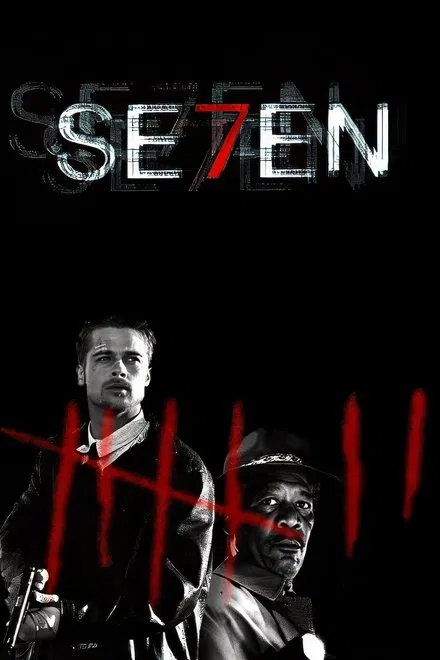
Directed by: David Fincher
Starring: Brad Pitt, Morgan Freeman, Gwyneth Paltrow, Kevin Spacey, R. Lee Ermey
🧠 Introduction: Descent into the Abyss
Se7en (1995) is a masterclass in suspense, moral ambiguity, and existential horror. David Fincher’s relentless thriller follows detectives Somerset (Morgan Freeman) and Mills (Brad Pitt) as they track a serial killer who crafts murders to embody the seven deadly sins. The film’s iconic ending—what’s in the box?—remains one of cinema’s most harrowing, ambiguous, and debated conclusions. But what does it really mean, and why does it endure?
🔎 The Seven Sins: Order and Chaos
Each murder in Se7en is a gruesome tableau: gluttony, greed, sloth, lust, pride, envy, and finally, wrath. John Doe (Kevin Spacey), the killer, believes he is delivering a twisted sermon on the state of humanity—each act a lesson, each death a message. Somerset and Mills, world-weary and hot-blooded respectively, struggle not only to solve the case, but to maintain their moral compasses amid the darkness.
📦 The Desert, the Box, and the Choice
In the film’s final act, Doe surrenders, leading the detectives into a barren field. There, a box is delivered—a box containing the severed head of Mills’s wife, Tracy (Gwyneth Paltrow). Doe calmly reveals that he envied Mills’s simple life, and thus killed Tracy to provoke Mills into completing the cycle by enacting the final sin: wrath. Mills, overcome with grief and rage, executes Doe, completing the killer’s masterpiece and ensuring his own destruction.
🧩 Ending Explained: The Trap of Violence
Fincher’s camera lingers on Mills’s devastation, Somerset’s despair, and Doe’s bloody satisfaction. Justice is not served, and evil is not vanquished—instead, the film suggests that violence begets violence, and that the line between good and evil is perilously thin. The world remains broken, its horrors unredeemed.
🎯 Final Thoughts: The Darkness We Inherit
The ending of Se7en refuses comfort or closure. Instead, it is a warning: in a world of sin and suffering, the greatest danger lies not in monsters, but in the ordinary human heart. The question “what’s in the box?” is less about the contents than the choices that lead us there—and what happens when we open doors we cannot close.
 About
About