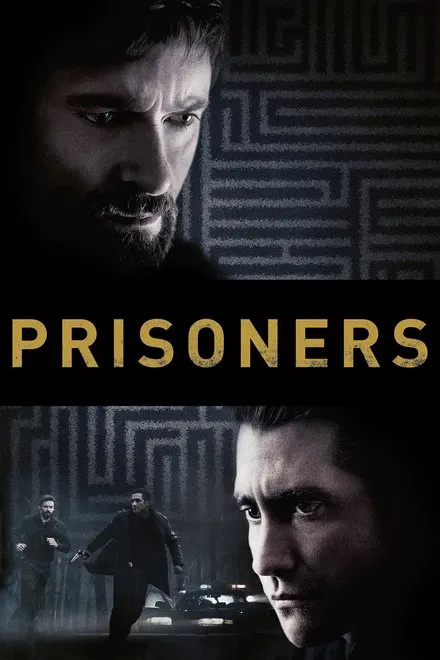
Directed by: Denis Villeneuve
Starring: Hugh Jackman, Jake Gyllenhaal, Viola Davis, Maria Bello, Paul Dano, Terrence Howard, Melissa Leo
🧠 Introduction: Who Is Saved and Who Is Lost?
Prisoners (2013) is a harrowing thriller about the disappearance of two young girls and the desperate, morally ambiguous search to find them. Denis Villeneuve’s film is as much a meditation on faith, punishment, and survival as it is a gripping crime story. By the final scene, audiences are left breathless: as the credits roll, we hear a faint whistle in the snowy night—but its meaning is left tantalizingly open. What really happens to Keller Dover? And what does the ending say about justice and redemption?
🕳️ Desperation and Descent
Keller Dover (Hugh Jackman), a deeply religious and protective father, becomes obsessed after his daughter and her friend vanish. When the police fail to detain the mentally challenged Alex Jones (Paul Dano), Dover kidnaps and tortures him in a frantic attempt to extract information. Meanwhile, Detective Loki (Jake Gyllenhaal) doggedly pursues clues, uncovering a tangled history of abductions and trauma. The film’s tone is bleak and relentless, with both men descending into their own forms of hell.
🔄 The Maze, the Whistle, and the Hidden Prisoner
The plot’s puzzle-box structure mirrors the literal and figurative mazes the characters inhabit: underground chambers, complex clues, and moral labyrinths. In the climax, Loki discovers the true kidnapper—Holly Jones (Melissa Leo)—and rescues Anna, but Keller is left trapped underground, wounded and alone. As police search the property, Loki hears a faint sound: the whistle Keller had given his daughter, now blown weakly by Keller as he lies beneath the ground.
🕯️ Ending Explained: Justice, Faith, and Fate
The final shot—a close-up of Loki pausing, head cocked as he listens—embodies the film’s ambiguity. Does Loki realize what he’s hearing? Will Keller be saved, or will he perish in darkness? The answer is never spelled out. This deliberate lack of resolution invites viewers to consider their own values: What price justice? What does faith require in the face of suffering? Is Keller’s ordeal a punishment, a test, or a tragedy without redemption?
🎯 Final Thoughts: The Whistle in the Dark
Prisoners ends in a place of uncertainty and haunting possibility. The faint whistle is a fragile note of hope in a world otherwise defined by cruelty and ambiguity. In the end, the real “prisoners” may be those who cannot let go—who remain lost in the mazes of guilt, vengeance, and love.
 About
About