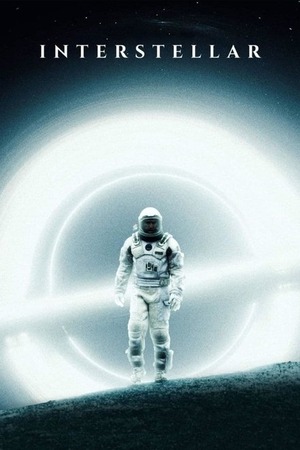
Directed by: Christopher Nolan
Starring: Matthew McConaughey, Anne Hathaway, Jessica Chastain, Michael Caine, Mackenzie Foy
🚀 Introduction: A Cinematic Meditation on Survival
Interstellar (2014) stands at the intersection of theoretical physics and emotional storytelling, becoming a rare example of blockbuster cinema grappling seriously with concepts like time dilation, relativity, and multidimensional existence. Nolan’s vision is rooted in the crisis of a dying Earth, where Cooper—a pilot-turned-farmer—joins a last-ditch space mission to find a new home for humanity. But beneath the surface of cosmic spectacle, Interstellar asks fundamentally human questions: What is the nature of time? Can love transcend spacetime? What does it mean to be a parent facing extinction?
🕳️ Wormholes, Black Holes & Higher Dimensions
At the heart of Interstellar lies the symbolism of the wormhole—a shortcut through space-time, discovered near Saturn. This literal “hole” in the universe is a portal to possibility, hope, and danger. Dr. Brand (Michael Caine) explains the physics, while Nolan’s script layers on metaphysical implications: the unknown is both terrifying and liberating. Cooper’s journey through the wormhole and, later, into the black hole Gargantua, dramatizes humanity’s urge to leap into the void for the sake of something greater.
The tesseract sequence, where Cooper interacts with his daughter Murph through the fifth dimension, externalizes memory as a physical, navigable space. Bookshelves become the threshold between regret and redemption. Here, the film takes a theoretical leap, depicting love as a force that can "cross dimensions," not unlike gravity. The black hole is not just a scientific phenomenon—it becomes a crucible for revelation and atonement.
⏳ Time Dilation: The Relativity of Love and Loss
One of the film’s most haunting sequences takes place on Miller’s planet, where an hour equals seven years on Earth due to its proximity to Gargantua. The ticking score (Hans Zimmer’s iconic organ) measures the loss of time not as abstract math, but as the erosion of relationships and hope. When Cooper and Brand return to the Endurance after their failed mission, they discover that 23 years have passed for their colleague Romilly—and for Murph, now an adult back on Earth.
This concept of time dilation becomes a metaphor for every parent who misses their child’s growth, every astronaut who sacrifices the present for a future they may never see. The pain of separation is rendered as literal relativity, turning scientific theory into emotional reality.
🌱 Love as the Bridge Across the Abyss
Brand’s assertion that “love is the one thing that we’re capable of perceiving that transcends dimensions of time and space” is more than poetic license—it’s the film’s central thesis. Skeptics in the story (and in the audience) may dismiss this as sentimentality, but Nolan structures the narrative so that love’s irrational, binding power is what saves the species. It’s Murph’s unwavering faith in her father’s return that ultimately solves the gravity equation and unlocks humanity’s escape from extinction.
Love, in Interstellar, is coded as both a source of suffering (the pain of separation, the fear of loss) and as an evolutionary advantage—a reason to act, persist, and believe. The film blurs boundaries between science and spirituality, suggesting that what we cannot measure may still shape the universe.
🛰️ Human Hope in the Age of Collapse
The film is haunted by apocalypse: dust storms, crop blight, institutional denial. Nolan’s Earth is not a playground for superheroes, but a world crumbling under the weight of its own limits. The schoolbooks now teach that the Apollo missions were faked, a symbol of how hope and ambition have become liabilities. Cooper’s rebellion—his choice to leave—is both an act of faith and an accusation against complacency. The ultimate enemy is not nature, but resignation.
Murph, the daughter left behind, grows up into a scientist and the film’s emotional anchor. Her journey parallels her father’s across space, reinforcing that the fight for survival is as much about memory and connection as about technical solutions. In the final act, their “reunion” across spacetime is less about physics than about the enduring, generational hope that binds families and civilizations.
🎯 Final Thoughts
Interstellar fuses cosmic grandeur with intimate vulnerability, using the vastness of the universe to explore what is most personal. Its symbolism—bookshelves, watches, cornfields, and wormholes—invites viewers to meditate on what we owe to the future, and what it means to persist in hope when everything seems lost. Nolan asks us to look up at the stars not just with curiosity, but with the stubborn belief that love, like gravity, binds us together across all divides.
 About
About